1. SHRINK THE LAWN
Every square foot dedicated to lawn is a square foot that is degrading our local ecosystems. Turfgrass offers no ecological benefits. Doug asks that we consider reducing our lawn areas by half for walkways and paths that define beds, tree groves.
2. REMOVE INVASIVE SPECIES
Invasive plants are ecologically destructive because they rapidly spread into our local ecosystems, suffocating the ecosystem’s ability to function. If every property owner removed the most egregious invasives in their yard with the goal of ridding the U.S. of these troublemakers, or at least reducing their spreading seed rain to manageable levels, would be quite beneficial.
3. PLANT KEYSTONE GENERA
Doug’s research at the University of Delaware has shown that a few genera of native plants or keystone genera form the backbone of all local ecosystems, particularly in terms of producing the food that fuels insects and the wildlife that depends upon them for survival. Landscapes that do not contain one or more species from keystone genera will have failed food webs, even if the diversity of other plants is high.
SOME KEYSTONE PLANTS:
Woody Plants
Native Oaks (e.g. White Oaks) are the superstars!
Native Cherries
Native Willows
Native Birches
Cottonwoods, Elms
Top herbaceous (plants that do not have woody stems) producers are:
Goldenrods
Asters
Sunflowers
4. BE GENEROUS WITH YOUR PLANTINGS
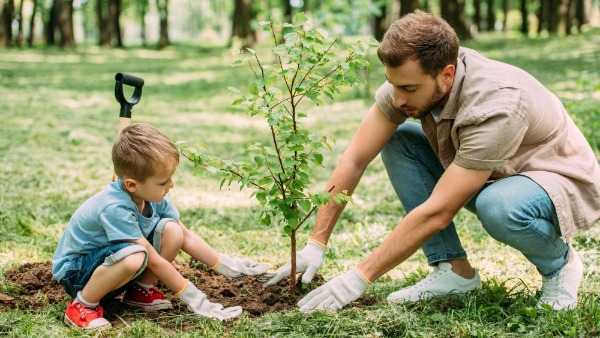
To realize the ecological potential of our landscapes, most of us should increase the abundance and diversity of our plantings. If you have one tree in your yard, consider adding two more. The idea is to plant groves of trees at the same density at which they occur naturally in a forest.
5. PLANT FOR SPECIALIST POLLINATORS (Bees, Butterflies)
Because so many of our native bee species specialize on plant groups when gathering pollen for their larvae, it is essential that we meet their needs in our pollinator gardens. Some of the best plants for specialists include:
Perennial Sunflowers
Various Goldenrods
Native Willows
Asters
Blueberries.
Here in Massachusetts, we have nine species of native bees (we once had at least 11 …) according to Prof. Robert Gegear, UMASS-Dartmouth.
6. NETWORK WITH NEIGHBORS
As you “light yourself up” planting native species, it is likely your neighbors will light up too. Whatever your size property, adding your neighbor’s yard begins the process of building ecological networks.
7. BUILD A CONSERVATION HARDSCAPE (you do not have to be a gardener!)
Each year millions of toads, frogs, and other small creatures become trapped in our window wells where they slowly starve to death. Installing cheap window well covers can reduce these needless deaths to zero.
Use motion sensor security lights that light up only when an intruder enters your yard. Blazing security lights on all night kill thousands of moths (and wastes energy and money!). Set your mower height no lower than 3 inches. This will give you healthier greener grass that requires substantially less watering but also mows safely over a box turtle. Try not to mow in the evening when many nocturnal species leave their hiding places. Install a bubbler. Small water features with gentle gurgling sounds are irresistible to migrating and resident birds.
8. CREATE CATERPILLAR PUPATION SITES UNDER YOUR TREES
More than 90% of the caterpillars that develop on plants drop to the ground and pupate (transform from larval stage to adults) within the natural duff on the ground or within chambers they form underground. It is best to replace lawn under trees with well-planted beds with groundcover appropriate for your area. It is easy, and you should leave leaf litter under your trees, rocks, and old tree stumps.
9. DO NOT SPRAY OR FERTILIZE
Insecticides and herbicides are antithetical to the goals of “Homegrown National Parks”. Less evident is that fertilizers are also completely unnecessary, and harmful when transported as runoff to our many streams, rivers, and ponds. Creating soils rich in organic matter is entirely sufficient for healthy plants. Save time, money, and the environment! Protect all of Sherborn groundwater!
10. EDUCATE YOUR NEIGHBORHOOD CIVIC ASSOCIATION
Many homeowners believe they cannot use more native plants in their landscape because of rules developed and enforced by their township, civic association, or homeowner association. These rules are likely dated as they were created when we did not know then what we do now. “Homegrown National Parks”™ includes starting new habits in how we landscape.